


Cart
0
Swell Sport · Outdoor sauna guide
How Long Does a Traditional Sauna Take to Heat Up?
A traditional sauna’s warm-up time depends on the starting temperature, selected setting, heater, stone load and installation. Build preheating into your routine: check the cabin and heater area, start the heater using its supplied instructions, keep the door closed and allow the air, timber and stones to warm. Record a few cold starts in your own conditions to find a practical preheat window. Warm-up time is separate from how long anyone should stay inside.
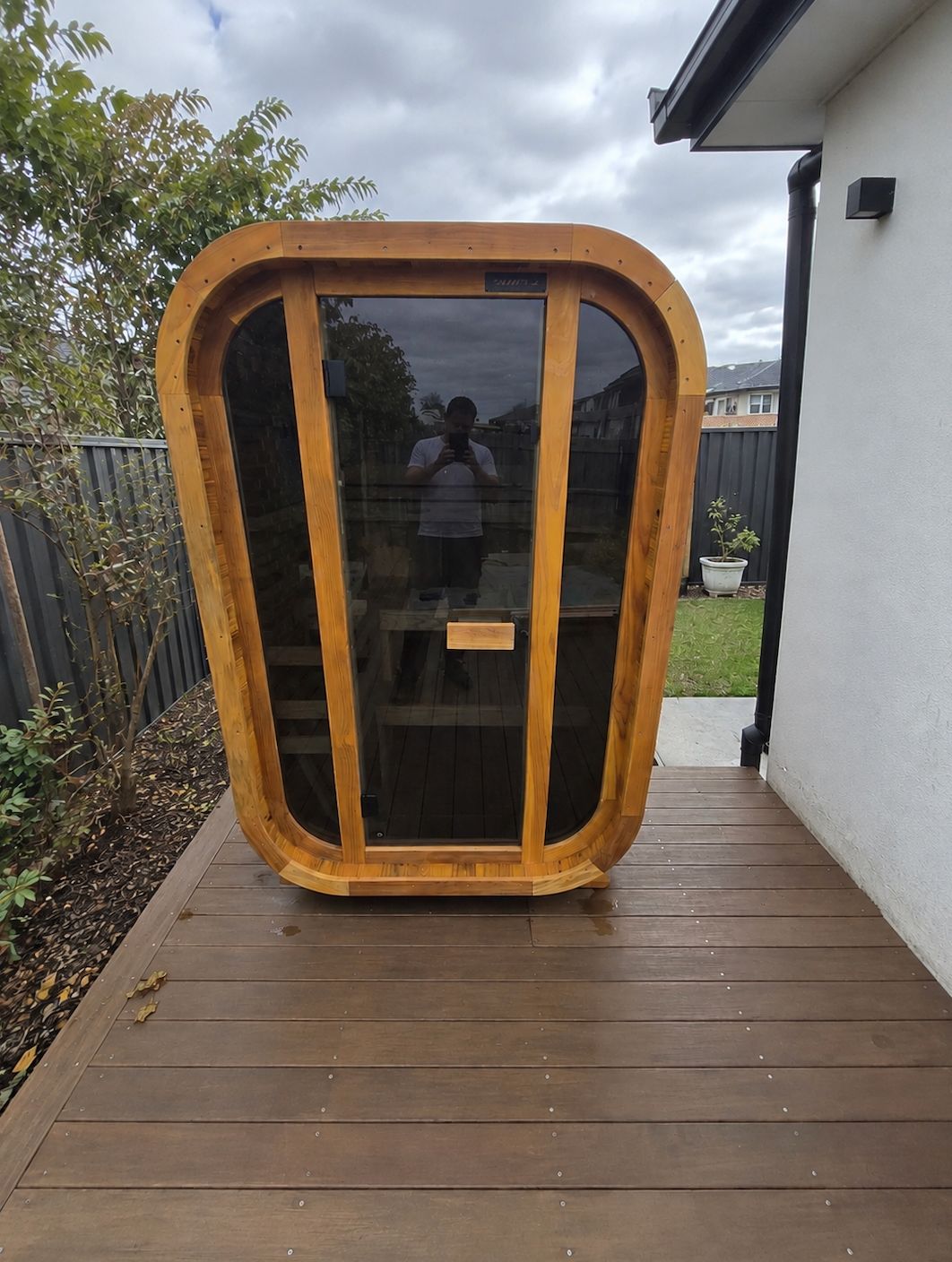
Separate warm air from a ready stone bed
A thermometer describes the temperature where it is mounted; it does not directly measure every bench, timber surface or stone. Harvia notes that stone quality, size and placement affect heat retention and steam generation.[1] This is why reaching a displayed setting is not the whole story when you intend to use water on approved sauna stones. Follow the heater instructions for heating and steam use rather than testing readiness with excessive water. Avoid judging the cabin solely by how quickly the first warm air appears.
Compare like-for-like starting conditions
Record whether the sauna starts on a mild afternoon or a cold winter evening, the selected setting and whether the door remains closed. A cold cabin and its contents need warming before the experience settles. Frequent door openings also change the comparison. If you are evaluating a supplier heat-up claim, ask which cabin, heater, starting temperature and target temperature were used. Without those details, a short advertised time may not describe your home. It should not become a deadline you try to meet by overriding the installation.
Understand what your controls actually measure
Use the supplied heater and controller instructions to learn what the settings and displayed readings mean. Do not assume different controls measure temperature in the same place. Ask the installer to demonstrate immediate heating, any delayed-start timer, normal temperature control and shutdown at handover. Turning an unfamiliar dial further is not a reliable troubleshooting method.
Preserve ventilation while warming up
Do not block an air inlet or move the temperature sensor to make the sauna heat faster. Harvia requires the sensor to remain in the location specified by the heater instructions and warns against inlet air cooling that sensor.[2] Ventilation arrangements depend on the system. An optional drying vent may have a different operating position from the normal bathing vents, so identify each one in the manual. A warm-up problem caused by installation needs review by the supplier or installer, not improvised changes to airflow.
Build a useful household baseline
For the first few uses after commissioning, note the outdoor conditions, start time, selected setting and time the cabin reaches the intended operating condition. Use the same thermometer position and avoid comparing different bench heights as if they were identical. These notes help you plan when to switch on before your usual session. In winter, allow scheduling flexibility. If the sauna is unexpectedly slow compared with its own previous behaviour, check the ordinary causes before changing the routine.
Know when slow warm-up needs attention
First confirm the correct timer mode, closed door and normal vent positions, using only user checks allowed by the manual. Review whether stone maintenance is due.[1] Repeated tripping, a fault display, damaged components or a major unexplained change calls for service; do not bypass a cut-out or repeatedly reset protection. Choosing a larger heater without checking cabin compatibility and electrical requirements is not a safe shortcut. Once warm, the cabin does not create an obligation to stay inside for a particular duration. Personal comfort and health remain separate decisions.[3]
Your practical checklist
- Ask what conditions sit behind any advertised heat-up time.
- Learn the timer and thermostat controls during handover.
- Keep a simple cold-start timing record for your own installation.
- Never alter sensors, vents or safety devices to chase a faster result.
Find your outdoor Cube

Swell Cedar Cube 2
A compact option for one or two people. Compare the current dimensions and heater packages.
Explore Cube 2
Swell Cedar Cube 4
Room for up to four people. Check the bench layout against the way you want to use it.
Explore Cube 4Keep reading
Sources and further reading
- Harvia sauna heater stones | Harvia
- Ventilation in the sauna
- Sauna safety tips — UNSW-hosted expert commentary (not a clinical trial)
General buying guidance, not a substitute for the supplied installation instructions or individual professional advice.


