


Cart
0
Swell Sport · Outdoor sauna guide
Using an Outdoor Sauna in Winter: What to Expect
Winter sauna ownership is about the whole journey from the house to the bench and back again. A warm cabin is only one part of it. Plan for cold starting conditions, wet paths, dry towels and post-use care rather than treating winter as a reason to turn the controls to their maximum.
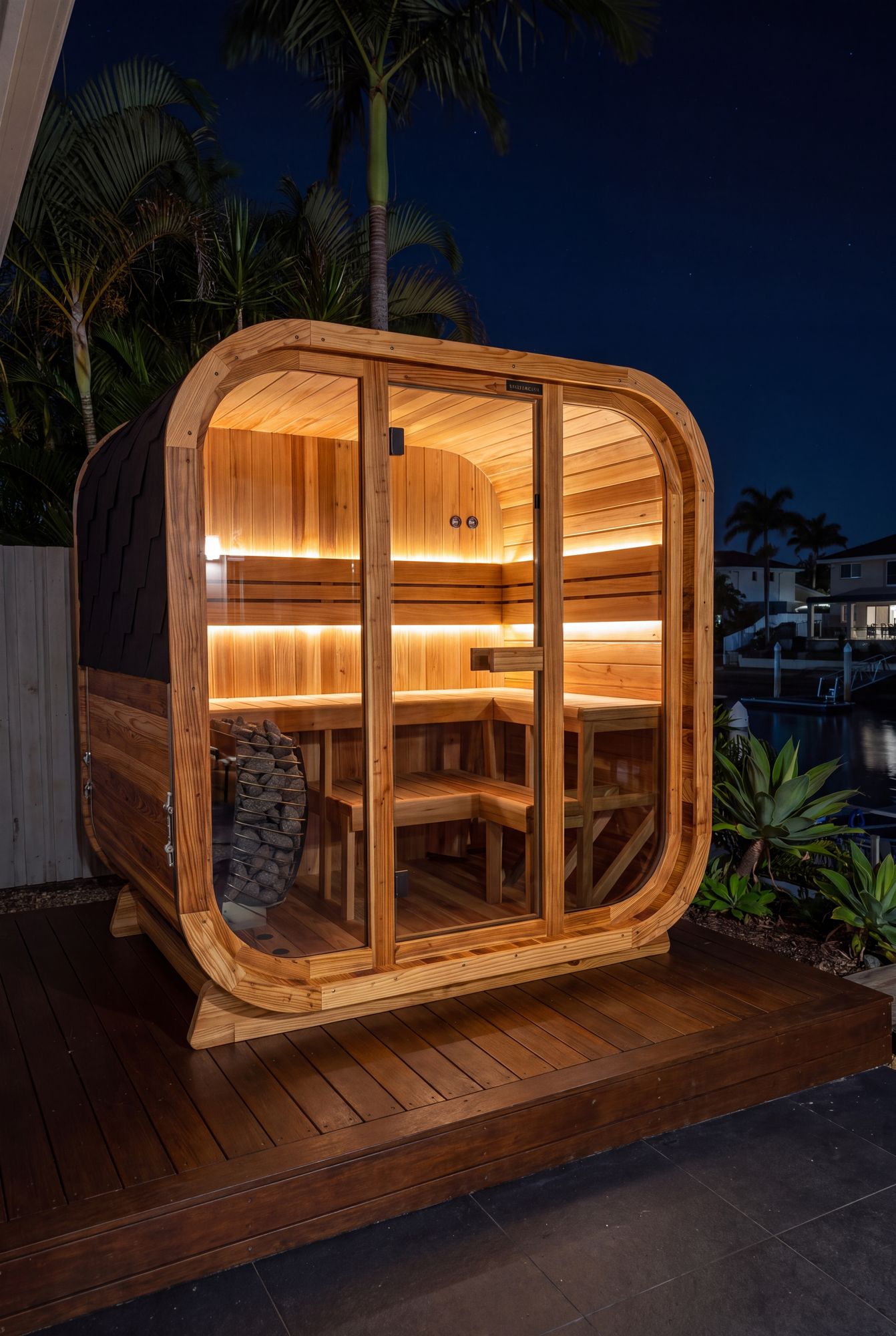
Allow the installation to show its winter behaviour
A cold cabin, benches and stones start from different conditions than on a mild afternoon. Avoid applying a summer heat-up observation as a winter guarantee. Keep a simple record of starting conditions, setting and warm-up time so the household can plan realistically. Harvia identifies stone quality, size and placement as factors in heat retention and steam generation.[1] Correctly maintained equipment matters, but a longer wait does not automatically mean the heater is faulty or that a higher-powered replacement is needed.
Make the route safe before making it picturesque
Walk the route after rain and after dark. Identify slippery paving, ponding, steps and places where a towel or robe could drag into water. In frost-prone areas, include the landing and return path in the household weather check. Provide lighting that lets people see the step and door threshold without carrying a phone as a torch. Keep footwear and dry towels close enough to reach without blocking the exit. A garden sauna should not require a hurried, poorly lit dash across an unsuitable surface.
Protect the cabin without sealing it in
Check the roof, runoff paths, supports and surrounding ground in line with the cabin maintenance instructions. Keep mulch and garden debris away from places that need drainage or inspection. Do not respond to cold weather by wrapping vents, covering the heater or building a close-fitting enclosure around the cabin. Harvia ventilation guidance depends on the airflow arrangement and requires the temperature sensor to remain correctly positioned.[2] If shelter or screening is being added, check its effect on clearances, airflow and access before construction.
Dry the interior as instructed
Wet towels and damp surfaces should not become the default state between uses. Remove personal items and follow the supplied cleaning and post-use drying instructions. Harvia distinguishes a drying vent from the normal operating airflow and describes leaving the door open after bathing as one possible drying arrangement.[2] Apply the procedure appropriate to your actual cabin and weather exposure rather than leaving a door open to wind-driven rain. Never leave fabrics over the heater to dry, and do not invent an unattended heating programme.
Cold weather does not cancel heat risk
Cold weather does not remove heat risk. Healthdirect’s general heat-illness guidance identifies health conditions, medicines and dehydration as relevant risk factors.[3] Keep sauna use brief and comfortable, avoid alcohol and speak with your GP about relevant health conditions or medication; these precautions are consistent with Australian expert commentary hosted by UNSW.[4] Leave if dizzy, nauseated or faint. For confusion, collapse or suspected heatstroke, call 000.[3] A normal cooldown is enough; an ice bath is not required.
Know the limits of the outdoor specification
An outdoor label is not proof that every location, storm exposure or snow load is covered. Ask for site-specific confirmation where conditions are unusual, and follow any cold-weather requirements for accessories, plumbing and controls. Keep an eye on changes such as leaks, door problems or unexplained electrical faults rather than normalising them as winter quirks. If the sauna has been unused for an extended period, complete the manual checks before restarting. A reliable winter routine is predictable, maintained and easy to stop when conditions are unsuitable.
Your practical checklist
- Check the route, landing and lighting in actual winter conditions.
- Allow flexibility for cold-start warm-up rather than chasing a fixed time.
- Keep ventilation and drying arrangements faithful to the manuals.
- Treat hot-to-cold immersion as a separate safety decision.
Find your outdoor Cube

Swell Cedar Cube 2
A compact option for one or two people. Compare the current dimensions and heater packages.
Explore Cube 2
Swell Cedar Cube 4
Room for up to four people. Check the bench layout against the way you want to use it.
Explore Cube 4Keep reading
Sources and further reading
- Harvia sauna heater stones | Harvia
- Ventilation in the sauna
- Heatstroke
- Sauna safety tips — UNSW-hosted expert commentary (not a clinical trial)
General buying guidance, not a substitute for the supplied installation instructions or individual professional advice.


