


Cart
0
Swell Sport · Outdoor sauna guide
Choosing an outdoor sauna for South Australian homes
For a South Australian home, choose the sauna around the site and the way you intend to use it. An Adelaide courtyard needs a careful space plan; a coastal block needs an exposure plan; a Hills property may need more groundwork than the product photographs suggest.
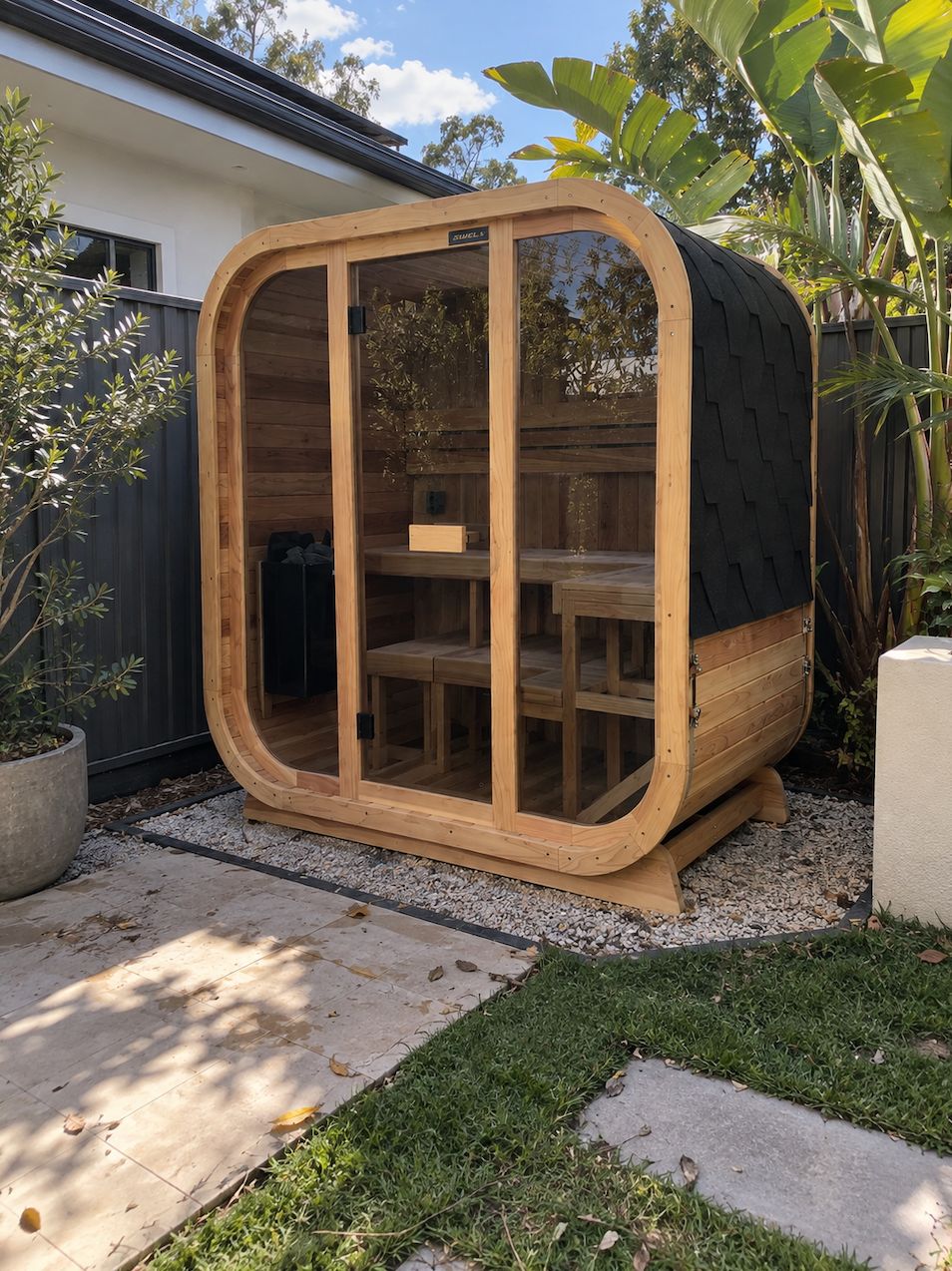
Use the South Australian approval pathway
PlanSA explains that development involving building work requires building consent as part of its approval. The relevant assessment depends on the proposed work and location.[1] Ask your council or building professional how the sauna and its base will be classified, and whether planning consent, building consent or an exemption applies. Do not assume that a product described as portable or flat-pack is automatically outside the approval process.
Adelaide courtyard: protect useful space
Draw the usable area after allowing for paths, clotheslines, doors and service access. A sauna that fills the entire paved corner can make the garden less practical even if the cabin technically fits. Consider the glass front orientation: you may value a garden view but want screening from neighbouring windows. Position a privacy screen far enough away to preserve the prescribed ventilation, maintenance access and clearances rather than boxing the cabin in.
Coast, Hills and open country need different questions
On a coastal site, ask about cleaning exposed fittings and checking the roof and exterior finish. On a Hills site, inspect slope, runoff, delivery turns and whether a new platform needs structural design. Where bushfire controls apply, ask the relevant authority about siting and construction requirements; an electric heater does not make the surrounding timber structure exempt. On an open sunny block, think about the unheated cabin, door handle and path as well as the heated interior. A shaded waiting area can make the setup more pleasant without modifying the sauna itself.
Match the cabin to normal occupancy
The Cube 2 and Cube 4 both use solid Japanese cedar and a shingled roof; the meaningful first choice is the seating space you need.[2][3] Compare actual bench layout, not just a two-person or four-person badge. Swell uses continuous solid cedar slats rather than slats assembled from shorter joined pieces, with no epoxy or filler repairs in that timber. Ask the same construction questions when comparing alternatives, including hemlock or spruce cabins sold for outdoor use.
Keep summer operation and solar claims realistic
Hot weather and dehydration add to heat stress. Healthdirect explains the risks of prolonged heat exposure and fluid loss; this is general heat-illness guidance, not a sauna-specific treatment or session protocol.[4] If you are unwell or have a health condition, ask your clinician before using a sauna. Rooftop solar can reduce grid imports when generation coincides with heater use, but inverter output, other household loads and tariffs still decide the result.[5][6] Compare a realistic electricity scenario, not a promise that a sunny state means free sessions.
Your practical checklist
- Confirm the PlanSA and council pathway for the actual proposal.
- Check the path and resting area as carefully as the cabin location.
- Price groundworks and power before comparing package upgrades.
- Ask what outdoor care is required for the exact timber and finish.
Find your outdoor Cube

Swell Cedar Cube 2
A compact option for one or two people. Compare the current dimensions and heater packages.
Explore Cube 2
Swell Cedar Cube 4
Room for up to four people. Check the bench layout against the way you want to use it.
Explore Cube 4Keep reading
Australian installation support
Follow the supplied model instructions and use a licensed electrician for the heater connection.
Sources and further reading
- Building | PlanSA
- Swell Cedar Cube 2 — Swell product specifications
- Swell Cedar Cube 4 — Swell product specifications
- Heatstroke
- Inverters | energy.gov.au
- Get the most from your solar system | energy.gov.au
General buying guidance, not a substitute for the supplied installation instructions or individual professional advice.


